DMSLOG works with the TOS you already run
Navis N4, Tideworks, Octopi, TotalSoft CATOS, RBS — or another. DMSLOG is not a competing TOS: it bolts the landside layer on top of the one you run — appointments, gate & OCR, billing and connectors — while your TOS keeps its gate authority.
One documented API plus EDI, EIR and FTP. The same platform behind a million truck appointments a year, live in production since 2020 — added on top of your TOS, with nothing to migrate.
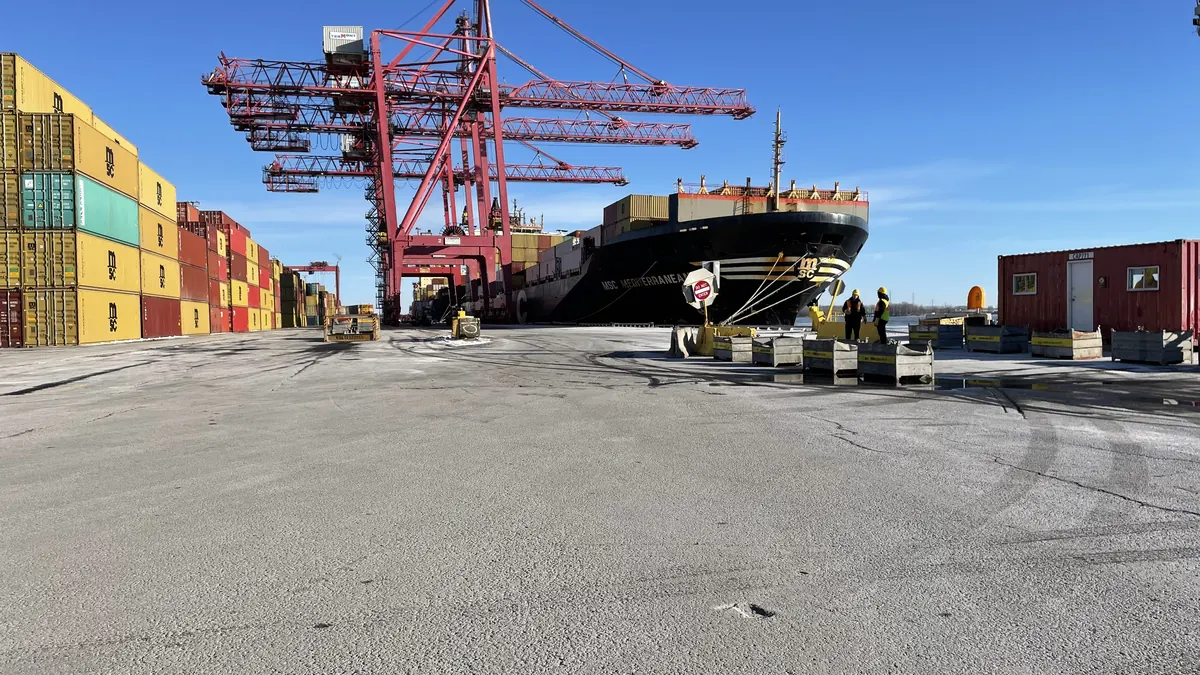
The terminal operating systems DMS plugs into today
Whichever one you run, DMS reads it and writes back through one documented API, plus EDI, EIR and FTP.




The landside layer DMS bolts on
Four bricks that sit on top of any TOS — each works on its own and plugs into the next, while your TOS keeps running the yard and the gate.
Appointments & availability (VBS)
Gate & OCR
Billing & Web Customer Portal
API & EDI connectors
How the landside layer sits on top of your TOS
Your TOS keeps running the yard and the gate
No rip-and-replace
Gate authority stays home
DMS is the landside layer, not a competing TOS. It plugs into Navis N4, Tideworks, Octopi, TotalSoft CATOS or RBS and leaves the yard logic exactly where it is.
One API in, one canonical model out
One documented API
Same shape every time
We map your yard, gate and billing fields to DMS once; after that every box and move lands in the right place, whichever TOS runs below.
Slots, gate moves and OCR on top
Book the slot
Read the gate
The landside flow — appointment, arrival, gate-in and gate-out — runs on DMS and writes every event back into your TOS.
Every port fee in one place
Amazon-like billing
Reconciled across borders
The Web Customer Portal reads the fees your TOS generates and turns them into a clean, payable portal for your customers.
The five TOS we plug into today
See exactly how DMS sits on top of yours — or tell us the one you run and we map it.
Why run DMS on top of your TOS
Keep your TOS
One canonical model
Gate authority stays home
Live on top, fast
Start with one brick
Standards-based
Read your TOS and report its carbon in the same flow
Every vessel call, discharge and gate-out your TOS records is already a data point. DMS turns that same event stream into the CO₂ of your port moves — scope-3 figures you can report, not a spreadsheet guess.
A proven landside layer, not a pilot
Platform scale, live in production since 2020.
Appointments / year
Carriers on the network
TOS integrated today
Ways in — API / EDI / EIR / FTP
Your TOS stays in place
Mechanics, not promises — this is what the integration does by design.
TOS — the one you already run, untouched and still in charge of the yard
canonical model — the same shape whichever TOS runs underneath
bolt-ons — appointments, gate & OCR, billing and connectors on top
migrations — nothing to rip out; the layer goes live on a running TOS
How DMS plugs into any TOS
From your TOS feed to events inside your own systems — one connected flow, five steps, nothing to migrate.
Connect
We read your TOS and terminal feeds through its API, EDI (COPARN, CODECO, COARRI, BAPLIE) or a file drop — no rip-and-replace.
Map
Your yard, gate and billing fields are mapped to DMS once, so every box and move lands in the right place.
Canonical model
DMS normalises it into one canonical model — the same shape whichever TOS runs underneath.
Write-back
Appointments, gate events and OCR reads flow back into your TOS; it stays the system of record and keeps gate authority.
Go-live
The landside layer goes live on top of your running TOS — no downtime, nothing to migrate.
We built DMS to sit on top of whatever TOS a terminal runs — Navis, Tideworks, Octopi, CATOS, RBS. One canonical model, one API, and your TOS keeps the gate. You add a landside layer, you don’t swap your system.

Questions, answered
No. DMS is the landside layer, not a competing TOS. It plugs into your Navis N4, Tideworks, Octopi, TotalSoft CATOS or RBS and leaves the yard and gate logic where it is — see the per-TOS pages for each one.
Navis N4, Tideworks, Octopi, TotalSoft CATOS and RBS today, each with its own page. Another TOS connects through the same standard API and EDI.
One documented REST API, plus EDI (COPARN, CODECO, COARRI, BAPLIE), EIR and FTP. We map your fields once into one canonical model, then every TOS behaves the same underneath.
Yes. Your TOS stays the system of record and keeps gate authority; DMS writes appointments, gate events and OCR reads back to it — it never overrules it.
Yes. Take appointments first, then gate & OCR, billing and connectors when you are ready — each brick works on its own.
We plug in through the same standard API and EDI (COPARN, CODECO, COARRI, BAPLIE). Tell us the one you run on the contact page and we map it.
Tell us which TOS you run
Name your TOS and the terminals you run it on, and we set up a call (Zoom, Teams or Meet) to map the landside bricks onto it.
Other actors we serve
Port authorities · Terminals · Shipping lines · Truckers · Forwarders · Depots