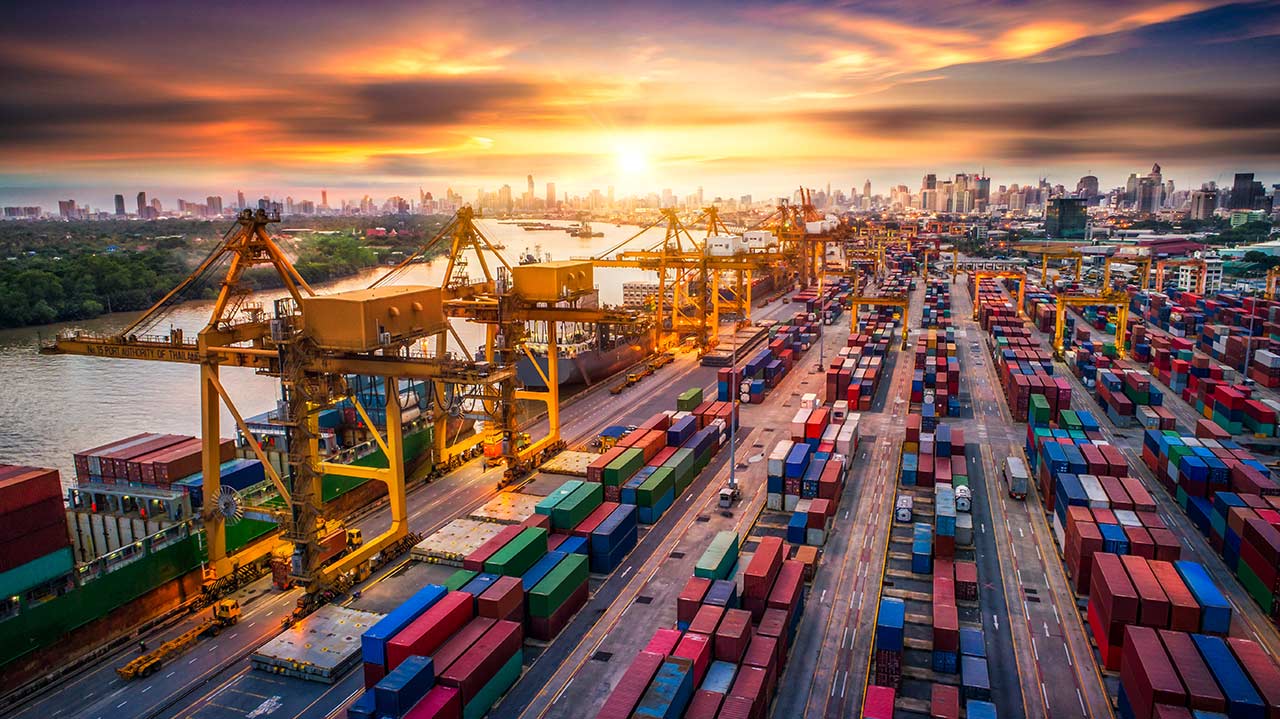

The AI Brain Behind Busan Port’s 2026 Vision
TL;DR: Busan Port’s 2026 AI Brain isn’t just automation—it’s a full-stack decision engine that autonomously optimizes container stacking, slashing retrieval times and pre-verifying yard plans with digital twins. If your yard planner still relies on gut instinct, it’s time to upgrade. Or, as we developers say, ‘It works on my machine!’
Busan Port’s 2026 vision isn’t just about cranes that move themselves—it’s about an AI Brain that makes autonomous decisions on where every container should live. Think of it as a chess grandmaster, but for 20-foot steel boxes. The system uses AI agents to simulate thousands of stacking scenarios, pre-verifying each move in a digital twin before a single crane arm twitches. This isn’t just automation; it’s agentic AI—where algorithms don’t just execute, they strategize. It’s like having a room full of junior devs who actually know what they’re doing!
Digital twins are the secret sauce here. By mirroring the physical yard in a virtual environment, Busan’s AI Brain can test stacking plans against real-world constraints—weight distribution, retrieval sequences, even weather delays—without risking a single misplaced container. The result? A 14-22% reduction in operational costs and a yard that runs like a Swiss watch, even when the weather doesn’t. For port operators still relying on spreadsheets and tribal knowledge, this is the equivalent of upgrading from a flip phone to a quantum computer. Or, in developer terms, moving from Notepad to VS Code.
The real magic happens in the AI’s ability to optimize for retrieval efficiency. Traditional yard planning treats containers like static inventory, but Busan’s system treats them like dynamic assets. By sequencing movements based on vessel schedules, cargo type, and even downstream logistics, the AI ensures that the right container is always in the right place at the right time. It’s not just about stacking smarter—it’s about stacking with purpose. Like a well-written algorithm, it’s all about the right data structures and efficient retrieval.
How AI Agents Outperform Human Planners
Human planners are great at pattern recognition, but they’re terrible at scaling it. An AI agent, on the other hand, can process millions of data points in seconds—vessel arrival times, container weights, customs clearance statuses—and spit out a yard plan that minimizes congestion and maximizes throughput. Busan’s AI Brain doesn’t just replace human intuition; it augments it with data-driven precision. It’s like having a senior dev on your team who never sleeps or needs coffee.
For example, a human planner might prioritize stacking containers by size or destination, but an AI agent considers all variables simultaneously. It knows that a refrigerated container bound for a vessel leaving in two hours should be placed near the top of a stack, while a heavy steel coil heading to a truck in three days can afford to be buried deeper. This level of granularity is what separates “good enough” from “optimal.” It’s like the difference between a junior dev’s code and a senior dev’s code—one works, the other works well.
The digital twin component is equally critical. Before any physical movement occurs, the AI simulates the entire yard operation, flagging potential bottlenecks or safety risks. If a proposed stacking plan would create a traffic jam for automated guided vehicles (AGVs), the system adjusts in real time. This pre-verification step alone can reduce costly errors by up to 30%, according to Hexaware’s smart port analysis. It’s like having a ‘this is fine’ dog for quality assurance—except it actually works.
From Chaos to Order: AI-Driven Yard Optimization
If your yard feels like a game of Jenga played by caffeine-addicted octopuses, you’re not alone. Most ports still rely on manual planning, which means containers are stacked based on availability, not strategy. AI-driven yard optimization flips this script by treating container stacking as a mathematical problem—one that can be solved with algorithms, not guesswork. It’s like moving from spaghetti code to clean architecture.
The core challenge in yard planning is balancing three competing priorities: retrieval time, weight distribution, and vessel loading efficiency. A container that’s easy to retrieve might throw off the weight balance of a stack, while a perfectly balanced stack might require extra crane moves during vessel loading. AI solves this by modeling the yard as a dynamic system, where every container’s position is a variable in a larger equation. It’s like solving a Rubik’s Cube with a computer—except the computer actually knows what it’s doing.
Sequencing Movements for Maximum Efficiency
One of the biggest inefficiencies in traditional yard planning is re-handling—the need to move containers multiple times to access the one you actually need. AI-driven systems minimize re-handling by sequencing movements based on predicted retrieval times. For example, if a container is scheduled for a vessel leaving in six hours, the AI ensures it’s placed in a position that won’t require shuffling when it’s time to load. It’s like having a to-do list that magically reorganizes itself based on deadlines.
This sequencing isn’t just about retrieval, though. It’s also about flow. A well-optimized yard moves containers like a conveyor belt, with minimal backtracking or congestion. AI achieves this by simulating the entire yard operation, identifying choke points, and adjusting stacking plans accordingly. The result? A 20-30% reduction in crane moves and a yard that operates like a well-oiled machine. Or, as we developers say, ‘It just works.’
Case Study: Rotterdam’s AI-Powered Yard
Rotterdam Port implemented an AI-driven yard optimization system in 2023 and saw immediate results. By using machine learning to predict container retrieval times and simulate stacking scenarios, the port reduced re-handling by 25% and improved vessel turnaround times by 12%. The system also dynamically adjusted stacking plans based on real-time data, such as delays in vessel arrivals or changes in cargo priorities. It’s like having a DevOps pipeline that actually deploys on time.
The key takeaway? AI doesn’t just optimize for today’s operations—it adapts to tomorrow’s challenges. Whether it’s a sudden surge in refrigerated containers or a last-minute change in vessel schedules, the system recalibrates in real time, ensuring the yard remains efficient no matter what curveballs are thrown its way. It’s like having a senior dev who can handle all the edge cases.
Weight Distribution: The Unsung Hero of Yard Planning
Weight distribution might not be as glamorous as retrieval efficiency, but it’s just as critical. A poorly balanced stack can lead to crane instability, safety risks, and even structural damage to containers. AI-driven systems solve this by treating weight distribution as a constraint in their optimization algorithms. Every container’s position is calculated to ensure the stack remains stable, even under dynamic loads like wind or crane acceleration. It’s like having a linter for your yard planning—catching all the potential errors before they become problems.
For example, an AI might place heavier containers at the bottom of a stack and lighter ones at the top, but it also considers the sequence of retrieval. If a heavy container is scheduled for early retrieval, the AI ensures it’s placed in a position that won’t require moving lighter containers out of the way. This level of precision is impossible to achieve with manual planning, where weight distribution is often an afterthought. It’s like the difference between writing code with and without unit tests.
PSA Singapore’s 99.5% Reliability: A Benchmark in Smart Ports
If you want to see the future of port automation, look no further than PSA Singapore. With a 99.5% vessel turnaround reliability rate, PSA isn’t just leading the pack—it’s lapping the competition. The secret? A combination of automated stacking cranes, smart yard management, and real-time data analytics that turn the port into a self-optimizing ecosystem. It’s like having a CI/CD pipeline that never fails.
PSA’s automated stacking cranes (ASCs) are the workhorses of this system. Unlike traditional cranes, which rely on human operators, ASCs are fully autonomous, using sensors and AI to navigate the yard, pick up containers, and place them with millimeter precision. But the real innovation isn’t the cranes themselves—it’s the system that controls them. It’s like the difference between a script kiddie and a real hacker.
The Power of Real-Time Data Analytics
PSA’s yard management system integrates data from every corner of the port—vessel schedules, container weights, customs clearance statuses, even weather forecasts—and uses AI to dynamically adjust stacking plans. If a vessel is delayed, the system recalculates retrieval sequences. If a container is flagged for customs inspection, it’s automatically moved to a priority stack. This level of real-time adaptability is what sets PSA apart from ports still relying on static planning. It’s like having a monitoring system that actually alerts you to problems before they become disasters.
The results speak for themselves. PSA’s 99.5% reliability rate isn’t just a statistic—it’s a competitive advantage. Shippers know they can count on PSA to deliver their cargo on time, every time, which translates to lower demurrage costs, happier customers, and a stronger bottom line. For port operators still struggling with reliability issues, PSA’s success is a wake-up call: the future of port operations is data-driven. It’s like the difference between debugging with print statements and using a proper debugger.
Lessons from PSA’s Approach
So, what can other ports learn from PSA’s success? First, automation isn’t a luxury—it’s a necessity. PSA’s ASCs aren’t just faster than human-operated cranes; they’re more reliable. By removing human error from the equation, PSA has achieved a level of consistency that’s impossible to match with manual operations. It’s like the difference between writing code in assembly and using a high-level language.
Second, real-time data is the lifeblood of smart ports. PSA’s system doesn’t just react to changes—it anticipates them. By integrating data from across the port ecosystem, the AI can predict bottlenecks before they happen and adjust stacking plans accordingly. This proactive approach is what allows PSA to maintain its 99.5% reliability rate, even in the face of unexpected disruptions. It’s like having a crystal ball for your operations.
Finally, scalability is key. PSA’s system isn’t just designed for today’s operations—it’s built to handle the port’s future growth. Whether it’s adding new berths, increasing container throughput, or integrating new technologies like blockchain for cargo tracking, PSA’s AI-driven approach ensures the port can scale without sacrificing efficiency or reliability. It’s like designing a system with microservices in mind—scalable and maintainable.
The Cost-Saving Power of Integrated Berth and Yard Planning
If your berth and yard planning teams are still operating in silos, you’re leaving money on the table. Integrated berth and yard planning—where AI optimizes both vessel berthing and container stacking simultaneously—can reduce operational costs by 14-22% and cut vessel turnaround times by up to 38.54%. The math is simple: the more variables you optimize for, the better the outcome. It’s like the difference between optimizing a single function and optimizing the entire algorithm.
The challenge? Berth and yard planning are complex problems. A berth plan needs to account for vessel sizes, arrival times, cargo types, and crane availability, while a yard plan must optimize for retrieval efficiency, weight distribution, and vessel loading sequences. Trying to solve these problems separately is like trying to solve a Rubik’s Cube one side at a time—it’s possible, but it’s not efficient. It’s like trying to debug a monolithic application—you never know where the problem is coming from.
How AI Handles the Complexity
AI solves this by treating berth and yard planning as a single optimization problem. Instead of planning berths and yards separately, the system considers them as interconnected variables in a larger equation. For example, if a vessel is delayed, the AI doesn’t just adjust the berth plan—it also recalculates the yard plan to ensure containers are stacked in the most efficient positions for the new schedule. It’s like having a global state management system for your port operations.
This integrated approach is what allows ports to achieve such dramatic cost savings. By optimizing for both berth and yard efficiency simultaneously, AI reduces idle time for vessels, minimizes crane moves, and ensures containers are always in the right place at the right time. The result? Lower operational costs, faster turnaround times, and happier customers. It’s like the difference between a spaghetti code and a well-architected application.
Real-World Examples of Cost Savings
Port of Hamburg implemented an integrated berth and yard planning system in 2022 and saw immediate results. By using AI to optimize both berth assignments and container stacking, the port reduced vessel turnaround times by 22% and cut operational costs by 18%. The system also reduced congestion in the yard, leading to fewer delays and a smoother flow of containers. It’s like refactoring a legacy system—suddenly everything just works better.
Similarly, Port of Los Angeles used AI-driven integrated planning to reduce vessel waiting times by 30% and improve yard efficiency by 25%. The system dynamically adjusted berth and yard plans based on real-time data, such as vessel delays or changes in cargo priorities. The result? A port that operates like a well-choreographed ballet, with every container and vessel moving in perfect harmony. It’s like having a symphony orchestra instead of a bunch of soloists.
The Role of Digital Twins in Integrated Planning
Digital twins play a critical role in integrated berth and yard planning. By creating a virtual replica of the port, AI can simulate thousands of scenarios to find the optimal plan. For example, if a vessel is delayed, the digital twin can test different berth assignments and stacking plans to find the one that minimizes disruption. This pre-verification step ensures that the physical port operates as efficiently as possible, even in the face of unexpected changes. It’s like having a sandbox environment for your port operations.
The beauty of digital twins is that they allow ports to test before they implement. Instead of making decisions based on gut instinct, port operators can rely on data-driven simulations to guide their planning. This not only reduces risk but also ensures that every decision is optimized for maximum efficiency. It’s like having a comprehensive test suite for your port operations.
2026 Predictions: The Future of Automated Port Operations
By 2026, automated stacking cranes won’t just be a competitive advantage—they’ll be table stakes. The ports that thrive will be the ones that embrace fully autonomous operations, where AI doesn’t just assist with planning but owns the entire decision-making process. Here’s what the future holds:
Fully Automated Cranes with Computer Vision
Today’s automated stacking cranes rely on sensors and pre-programmed paths, but the cranes of 2026 will use computer vision to navigate the yard with human-like adaptability. Imagine a crane that can “see” a misplaced container, adjust its path in real time, and even communicate with other cranes to avoid collisions. This isn’t science fiction—it’s the next logical step in port automation. It’s like having a self-driving car for your cranes.
Computer vision will also enable cranes to perform quality control on the fly. For example, if a container is damaged or improperly secured, the crane can flag it for inspection before it’s loaded onto a vessel. This level of real-time monitoring will reduce errors, improve safety, and ensure that only the highest-quality cargo makes it onto ships. It’s like having a linting tool for your containers.
Digital Twins for 24/7 Operations
Digital twins won’t just be for planning—they’ll be the backbone of 24/7 port operations. By mirroring the physical port in real time, digital twins will allow AI to continuously optimize stacking plans, berth assignments, and even maintenance schedules. If a crane breaks down, the digital twin can instantly recalculate the yard plan to minimize disruption. If a vessel arrives early, the system can adjust stacking sequences to ensure the cargo is ready to load. It’s like having a DevOps pipeline that never sleeps.
The result? A port that never sleeps. With digital twins handling the heavy lifting, ports can operate around the clock, maximizing throughput and minimizing downtime. This isn’t just about efficiency—it’s about resilience. A port that can adapt to disruptions in real time is a port that can weather any storm. It’s like having a disaster recovery plan that actually works.
Remote Monitoring and Control
By 2026, port operators won’t need to be on-site to manage operations. Remote monitoring and control systems will allow them to oversee the entire port from a centralized command center, or even from their laptops. AI will handle the day-to-day decisions, while human operators focus on strategic planning and exception management. It’s like having a remote debugging tool for your port operations.
This shift to remote operations will have profound implications for the industry. For one, it will reduce the need for on-site staff, lowering labor costs and improving safety. It will also enable ports to scale more easily, as operators can manage multiple terminals from a single location. And perhaps most importantly, it will allow ports to respond to disruptions faster, as AI can adjust plans in real time without waiting for human input. It’s like the difference between on-call support and having a dedicated team.
The Rise of Agentic AI
The biggest trend in 2026 won’t be automation—it’ll be agentic AI. Unlike traditional AI, which follows pre-programmed rules, agentic AI makes autonomous decisions based on real-time data. For port operators, this means AI that doesn’t just execute plans but creates them, adapting to changing conditions without human intervention. It’s like having a senior dev who can handle all the edge cases.
For example, an agentic AI might decide to reroute a container based on a sudden change in vessel schedules, or adjust stacking plans to accommodate a last-minute customs inspection. This level of autonomy will be the key to unlocking the next level of port efficiency, where every decision is optimized for maximum throughput and minimum cost. It’s like having a self-healing system for your port operations.
Conclusion: The Time to Automate Is Now
The ports of the future won’t be built on steel and concrete—they’ll be built on data and algorithms. Busan’s AI Brain, PSA Singapore’s 99.5% reliability, and the cost-saving power of integrated berth and yard planning are just the beginning. By 2026, automated stacking cranes with computer vision, digital twins for 24/7 operations, and agentic AI will be the new normal. It’s like the difference between writing code in the 90s and using modern DevOps practices.
The question isn’t if you should automate—it’s how fast you can get there. The ports that embrace AI-driven optimization today will be the ones setting the benchmarks for efficiency, reliability, and cost savings tomorrow. So, ask yourself: Is your yard planning AI as smart as Busan’s? If not, it’s time to start catching up. Or, as we developers say, ‘Don’t be the guy still using Notepad in 2026.’
Call to Action: Ready to bring your port into the future? Start by auditing your current yard planning processes. Identify inefficiencies, explore AI-driven optimization tools, and consider partnering with a technology provider to pilot a digital twin or automated stacking crane system. The future of port operations is here—don’t get left behind. It’s like upgrading from a flip phone to a smartphone—once you go digital, you never go back.
